
Stored Energy: The Battery, the Airbags and the Orange Cables
Stored Energy
Nothing in this lesson is hard. All of it gets skipped, usually by someone in a hurry on the last car of the day, and the failures it prevents are the kind that end careers rather than shifts.
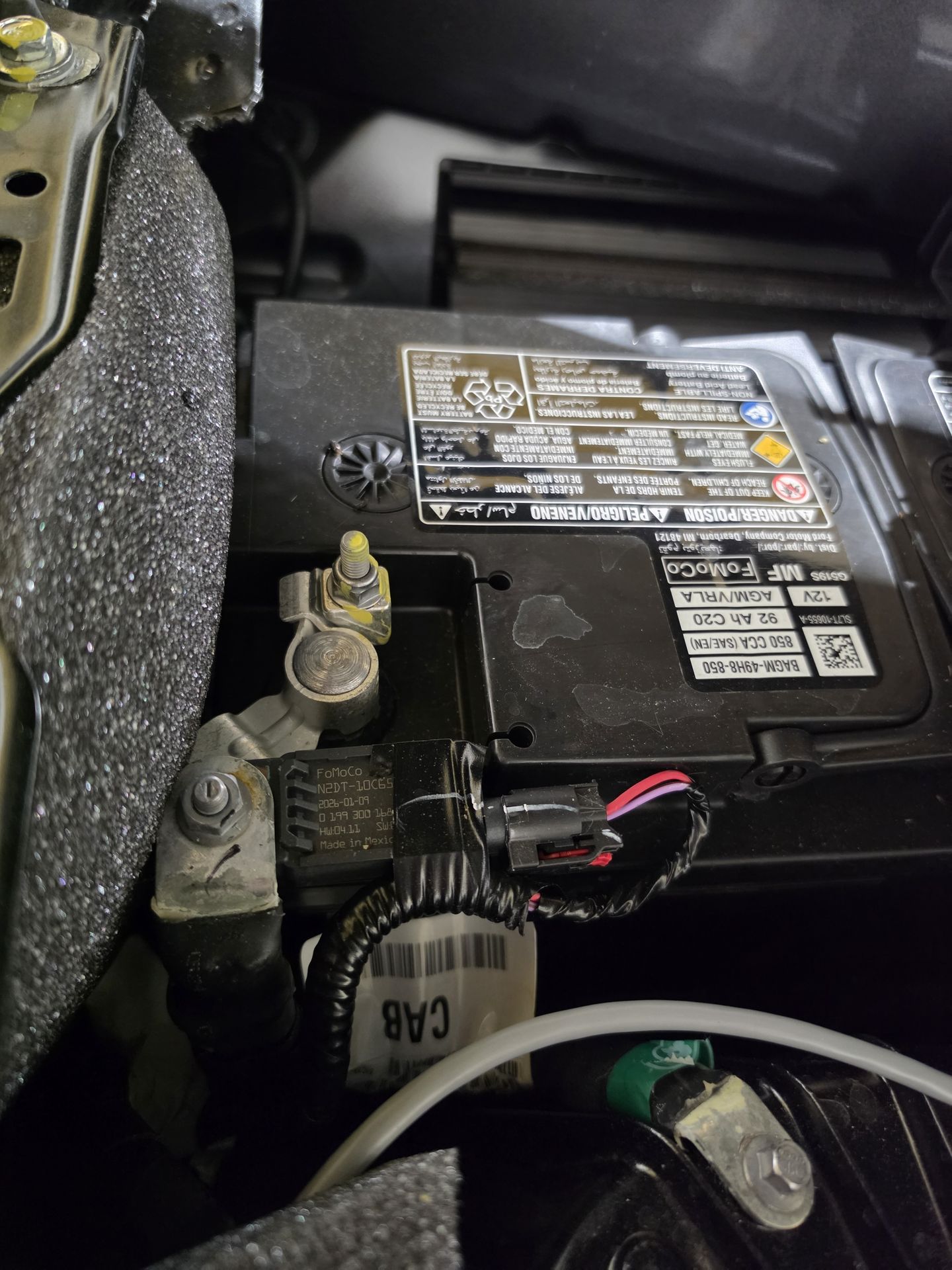
A parked vehicle is not a de-energised vehicle
Switch the ignition off and the dash goes dark, which makes the vehicle feel safe. It is not. Three separate energy stores are still live, and each one fails differently.
Every rule that follows exists because one of those three stores found a path it was not supposed to have. The rules are short; the mechanisms are what make them stick.
Negative first, and why the order is not a preference
- Ignition off, key or fob out of the vehicle and out of range.
- Open the upfitter guide and check whether this platform has a second battery or a factory disconnect.
- Remove the negative terminal first. Tie it back so it cannot spring onto the post.
- Remove the positive if the job needs it, and cap both ends.
- Start the SRS wait before a single panel tool comes out.
Think firstWhy does the order matter, if both cables end up off anyway?tap to reveal
Take the negative off first and the body is no longer connected to the battery. A wrench that slips off the positive post onto a strut tower now touches a piece of metal that goes nowhere.
Do it the other way and the body is still the return path. The wrench becomes the missing link in a short circuit with no fuse in it: it glows, it spatters, and the battery beside your face is vented hydrogen and acid. The same physics is why rings and metal watchbands come off before anyone leans into an engine bay — a ring across a terminal and a bracket heats faster than you can get a finger out of it.
The wait, and what it is actually for
SRS — Supplemental Restraint System — the airbags, seat-belt pretensioners, crash sensors and the control module that decides when to fire them.
Follow the service manual for the vehicle in front of you. Shops that want one number to stand behind use a flat five or ten minutes, spent reading the work order rather than standing next to the dash.
The reserve capacitor exists so the system still works in a crash that takes the battery out in the first few milliseconds. Take the battery off in a quiet bay and that same capacitor is a charged deployment source sitting behind trim you are about to pull. The wait is the capacitor bleeding down. Pulling an A-pillar cover two minutes after the terminal came off is not "close enough"; it is the one step in the procedure that has no visible indicator.
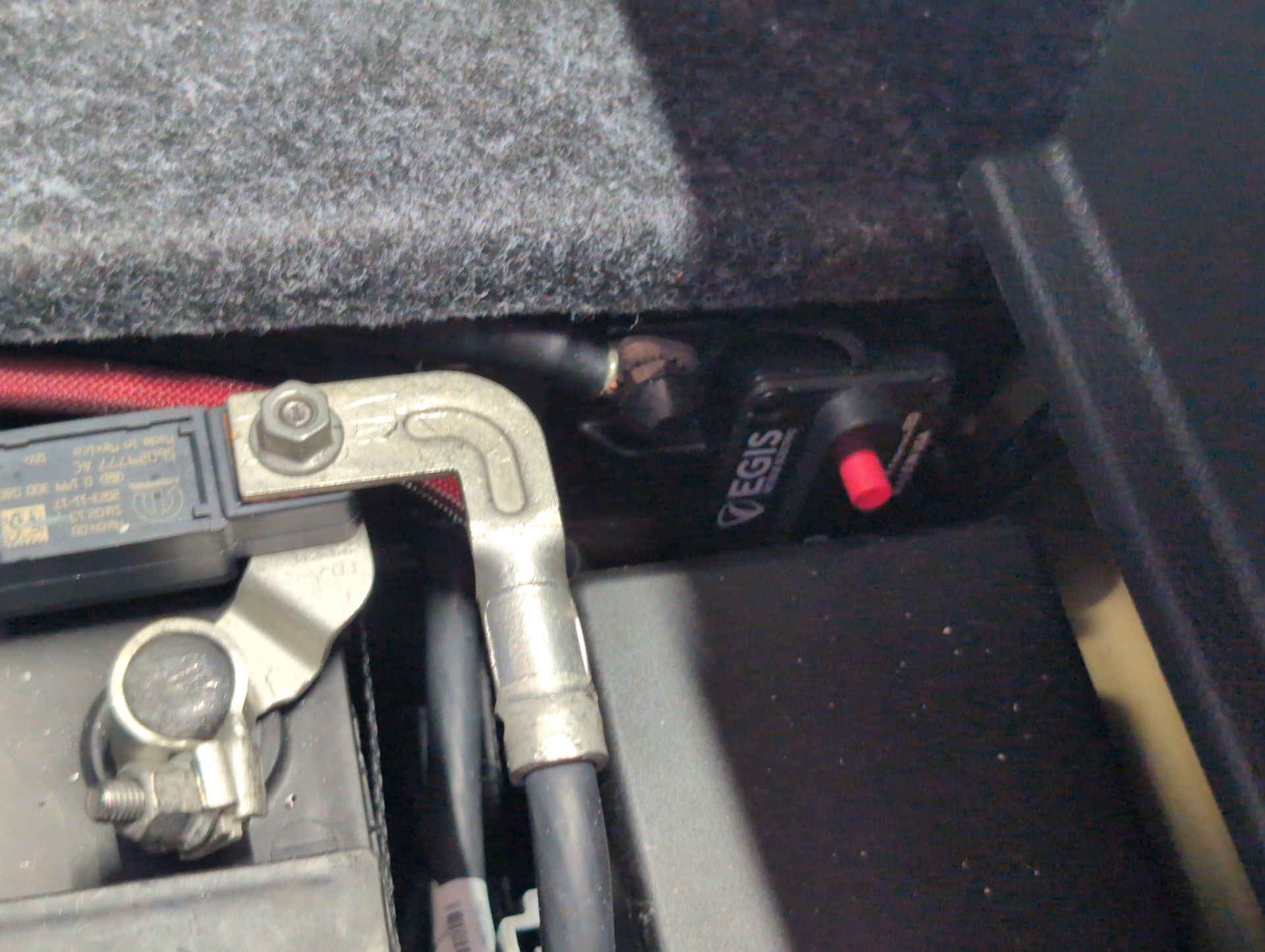
Yellow is the one colour with no exceptions
“All occupant restraint system wiring must remain intact and may not be used for any other purpose. Any electrical connector that is yellow is part of the occupant restraint system and should not be modified.”
The industry settled on yellow for restraint circuits so that a technician who knows nothing else about the vehicle still knows what not to touch. Do not cut it, tap it, splice it, extend it, bundle aftermarket wire alongside it, or use it as a convenient ignition source because it happens to run where you need power.
The two failure modes are symmetrical and both are unacceptable: a damaged restraint circuit can fire a bag at a red light, or fail to fire one in the crash it was bought for. There is no partial credit and no "it seems fine" state. If a yellow connector or harness is damaged during a build, the vehicle stops moving through the shop until someone qualified has repaired and verified it.
Hybrids are standard now, so high voltage is a shop problem
The hybrid is standard on the MY2026/27 Ford Police Interceptor Utility; the gas engines are the option. A shop that upfits patrol vehicles is now a shop that works around a high-voltage pack every week, even though the upfit itself is entirely a 12-volt job.

Same facts, three jobs
🔧 If you turn the wrenches
Treat the wait like a torque spec: it has a number, it comes from the service manual, and nobody can see whether you honoured it. Put the timer where the next person can see it too.
📋 If you run the fleet
Write the airbag light into the acceptance criteria. "Delivered with no active warning lamps, SRS verified" is one line and it removes an entire category of argument.
⭐ If you sign the PO
If an officer is hurt in a crash, the first question in discovery is what the shop did around the restraint system. The answer should be a documented procedure, not one technician's memory.
“The sensors and other components for the airbag system must not be relocated.”
Putting it back, and the light that stops delivery
- Every connector you unplugged is plugged back in and latched — seats and under-seat plugs especially.
- No aftermarket wire runs against a yellow harness, a moving part, a heat source or a sharp edge.
- Every panel, clip and fastener is back in; the hardware bag is empty.
- Positive on first, then negative. Terminals torqued, not guessed.
- Key on: the airbag lamp illuminates for its self-test and then goes out.
You are ten minutes from close on a Friday. The battery came off four minutes ago and the console pedestal needs its bolts started so the car can be finished Monday. The pedestal lives on the transmission tunnel, well away from any airbag.
- Negative off first, on last. Jewellery off. A wrench is the only fuse in that circuit.
- The SRS keeps its own backup power. The service-manual wait is the capacitor bleeding down, and it has no indicator light.
- Yellow connectors are never modified and never probed with a test light — a test light is a load.
- Hybrid is standard on the PIU: orange stays untouched, disconnect and wait, lock it out, then verify with a rated meter.
- An SRS warning lamp after the build stops delivery. Every time, no exceptions, no invoice notes.
Stored Energy
Nothing in this lesson is hard. All of it gets skipped, usually by someone in a hurry on the last car of the day, and the failures it prevents are the kind that end careers rather than shifts.
A parked vehicle is not a de-energised vehicle
Switch the ignition off and the dash goes dark, which makes the vehicle feel safe. It is not. Three separate energy stores are still live, and each one fails differently.
Every rule that follows exists because one of those three stores found a path it was not supposed to have. The rules are short; the mechanisms are what make them stick.
Negative first, and why the order is not a preference
- Ignition off, key or fob out of the vehicle and out of range.
- Open the upfitter guide and check whether this platform has a second battery or a factory disconnect.
- Remove the negative terminal first. Tie it back so it cannot spring onto the post.
- Remove the positive if the job needs it, and cap both ends.
- Start the SRS wait before a single panel tool comes out.
Think firstWhy does the order matter, if both cables end up off anyway?tap to reveal
Take the negative off first and the body is no longer connected to the battery. A wrench that slips off the positive post onto a strut tower now touches a piece of metal that goes nowhere.
Do it the other way and the body is still the return path. The wrench becomes the missing link in a short circuit with no fuse in it: it glows, it spatters, and the battery beside your face is vented hydrogen and acid. The same physics is why rings and metal watchbands come off before anyone leans into an engine bay — a ring across a terminal and a bracket heats faster than you can get a finger out of it.
The wait, and what it is actually for
SRS — Supplemental Restraint System — the airbags, seat-belt pretensioners, crash sensors and the control module that decides when to fire them.
Follow the service manual for the vehicle in front of you. Shops that want one number to stand behind use a flat five or ten minutes, spent reading the work order rather than standing next to the dash.
The reserve capacitor exists so the system still works in a crash that takes the battery out in the first few milliseconds. Take the battery off in a quiet bay and that same capacitor is a charged deployment source sitting behind trim you are about to pull. The wait is the capacitor bleeding down. Pulling an A-pillar cover two minutes after the terminal came off is not "close enough"; it is the one step in the procedure that has no visible indicator.
Yellow is the one colour with no exceptions
“All occupant restraint system wiring must remain intact and may not be used for any other purpose. Any electrical connector that is yellow is part of the occupant restraint system and should not be modified.”
The industry settled on yellow for restraint circuits so that a technician who knows nothing else about the vehicle still knows what not to touch. Do not cut it, tap it, splice it, extend it, bundle aftermarket wire alongside it, or use it as a convenient ignition source because it happens to run where you need power.
The two failure modes are symmetrical and both are unacceptable: a damaged restraint circuit can fire a bag at a red light, or fail to fire one in the crash it was bought for. There is no partial credit and no "it seems fine" state. If a yellow connector or harness is damaged during a build, the vehicle stops moving through the shop until someone qualified has repaired and verified it.
Hybrids are standard now, so high voltage is a shop problem
The hybrid is standard on the MY2026/27 Ford Police Interceptor Utility; the gas engines are the option. A shop that upfits patrol vehicles is now a shop that works around a high-voltage pack every week, even though the upfit itself is entirely a 12-volt job.
Same facts, three jobs
🔧 If you turn the wrenches
Treat the wait like a torque spec: it has a number, it comes from the service manual, and nobody can see whether you honoured it. Put the timer where the next person can see it too.
📋 If you run the fleet
Write the airbag light into the acceptance criteria. "Delivered with no active warning lamps, SRS verified" is one line and it removes an entire category of argument.
⭐ If you sign the PO
If an officer is hurt in a crash, the first question in discovery is what the shop did around the restraint system. The answer should be a documented procedure, not one technician's memory.
“The sensors and other components for the airbag system must not be relocated.”
Putting it back, and the light that stops delivery
- Every connector you unplugged is plugged back in and latched — seats and under-seat plugs especially.
- No aftermarket wire runs against a yellow harness, a moving part, a heat source or a sharp edge.
- Every panel, clip and fastener is back in; the hardware bag is empty.
- Positive on first, then negative. Terminals torqued, not guessed.
- Key on: the airbag lamp illuminates for its self-test and then goes out.
You are ten minutes from close on a Friday. The battery came off four minutes ago and the console pedestal needs its bolts started so the car can be finished Monday. The pedestal lives on the transmission tunnel, well away from any airbag.
- Negative off first, on last. Jewellery off. A wrench is the only fuse in that circuit.
- The SRS keeps its own backup power. The service-manual wait is the capacitor bleeding down, and it has no indicator light.
- Yellow connectors are never modified and never probed with a test light — a test light is a load.
- Hybrid is standard on the PIU: orange stays untouched, disconnect and wait, lock it out, then verify with a rated meter.
- An SRS warning lamp after the build stops delivery. Every time, no exceptions, no invoice notes.
There are no comments for now.
to be the first to leave a comment.