
How a Build Flows: Twelve Phases, and Why the Order Is Not Negotiable
How a Build Flows
Walk into an upfit shop on a Tuesday and you will see one car with its seats on a pallet, one with a bumper half-cut, one with a technician on a stool wiring a board on a bench, and one out front with everything lit. Those are not four jobs. They are one job, four times, at four points in the same twelve-step sequence.
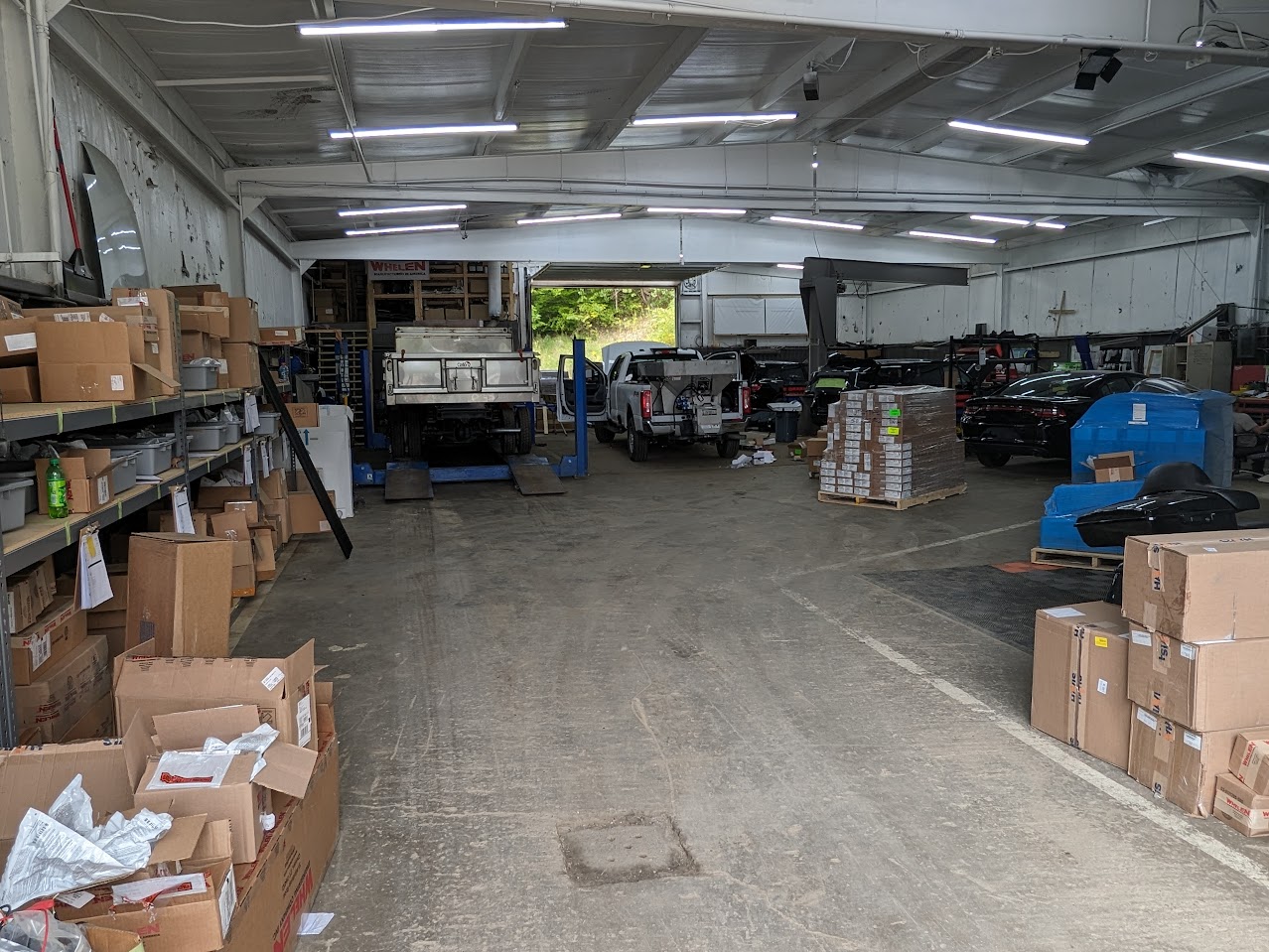
The vehicle is the easy part
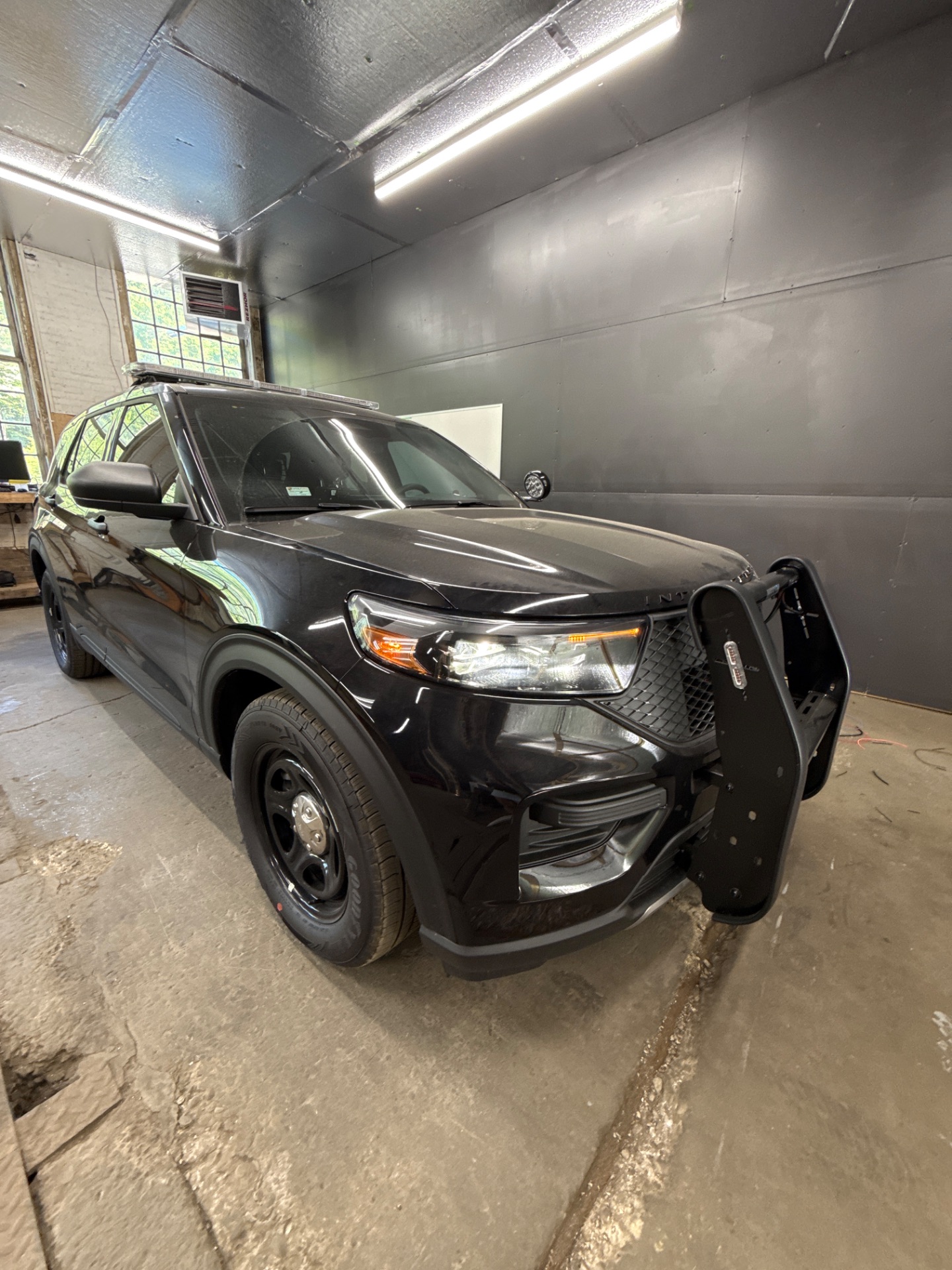
A new Police Interceptor Utility arrives from the dealer as a sturdy SUV with a big alternator, a reinforced floor and a lot of empty holes. Everything that makes it a patrol car gets added afterward, by hand, in a shop, by someone whose name is not on the grille.
That work has an order. It is not tradition and it is not paperwork. Each phase either opens an access path, produces a measurement, or proves something that the next phase depends on.
Out of order costs money twice. Run the wires after the partition goes in and you are fishing a bundle through a steel frame that now blocks the sill channel. Bolt the console down before the floor wiring is finished and you unbolt it again. Power the board up before a second person has checked polarity and you buy a controller.
A house. Rough-in plumbing and wire before the drywall, drywall before paint, paint before the trim carpenter shows up. Nobody argues about that order, because everyone has seen what happens when a plumber has to come back through a finished wall.
The twelve phases, end to end
| # | Phase | What it produces for the next phase |
|---|---|---|
| 1 | Intake & prep | A documented, protected, de-energized vehicle and a confirmed equipment list |
| 2 | Teardown | Open access paths; hardware bagged, panels photographed |
| 3 | Push bumper | The dirty cutting work done before clean wire goes in |
| 4 | Exterior lighting, antennas & wire runs | Every hole drilled and sealed; every wire pulled to the board location |
| 5 | Integration & auxiliary wiring | Vehicle signals available; every future circuit run while the car is open |
| 6 | Metal | Partition, console base, locks and armor bolted to factory points |
| 7 | Bench-built board | A complete, labeled, photographed electronics assembly |
| 8 | Connection & first power-up | A tested, programmed, verified electrical system |
| 9 | Cleanup | Copper debris out; a second look at everything before it is hidden |
| 10 | Reassembly | Trim and seats back; every factory system verified |
| 11 | Final accessories | Console populated, storage, mounts, mats, radar, cameras |
| 12 | Tech check, road test & delivery | A second-person inspection, a rework list that ends empty, and documentation |
Shops name them differently and some merge nine and ten. The order almost never changes.
Four rules underneath the twelve
These four rules explain almost every sequencing decision in the rest of the course. If you remember nothing else, you can reconstruct the phase order from them.
Who touches the car
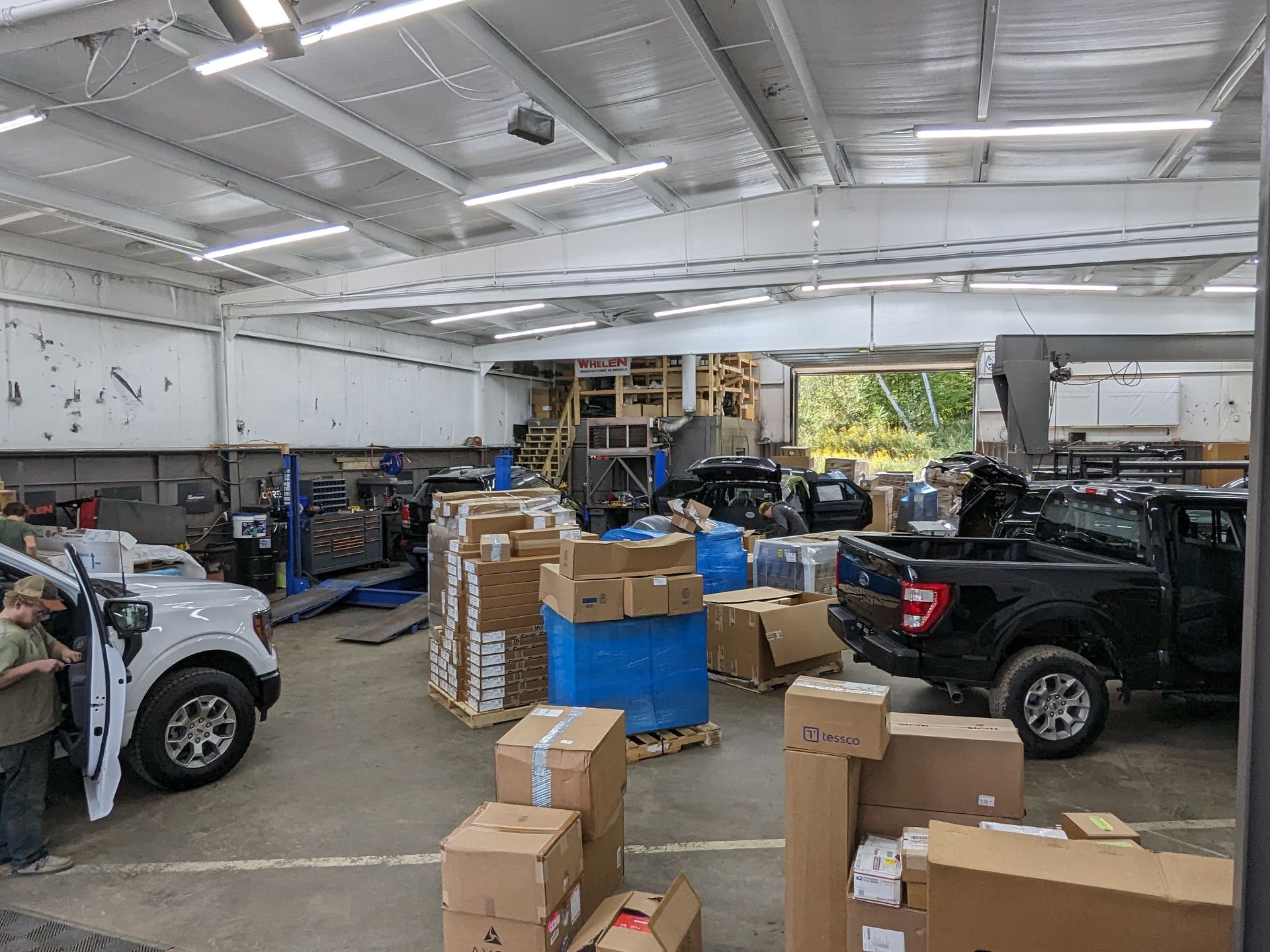
“I can’t stress how important the supply chain and supply management is to a production facility… Without the [parts personnel], you just cannot operate efficiently.”
The three-stage inspection model used across the industry is technician inspection during installation, a safety and QC verification, then a final inspection confirming both safety and function. Three looks, and the last two are not the builder’s.
What a build actually costs
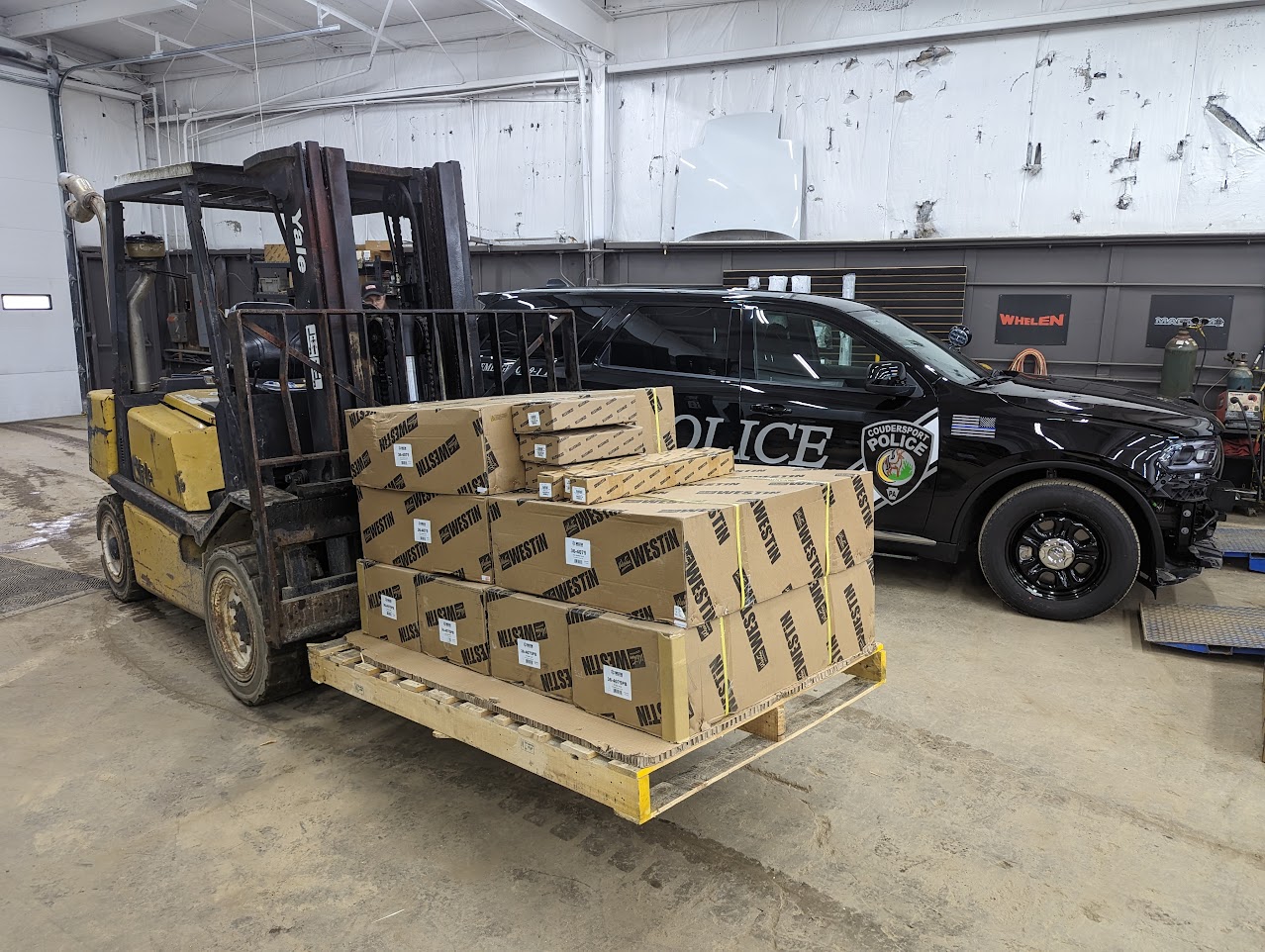
Sebastopol, California put a single 2025 Police Interceptor Utility in front of its city council with every line showing. The vehicle was $54,920. The equipment and upfit came to $22,692.49 and the graphics another $2,168.85, for $79,781.34 all in.
Think firstInside that $22,692 upfit: what do you think was the single biggest line item, and how big was the labor?tap to reveal
The lightbar was $2,600 and the CORE amplifier control module $1,306. Installation labor was $5,000 — about 22% of the upfit, and the largest single line on the page. A Setina push bumper was $889, the prisoner seat $998, the front partition $949, the cargo deck $1,489, and shipping was a real $750.
Two lessons a chief can use: the lights are not what the upfit costs, and any quote that hides labor inside part prices cannot be audited or compared.
Seattle’s city auditor found the opposite extreme in 2022: upfitting was 56% of the total vehicle cost, about $48,354 per car against a peer median of $17,620, with 18-month lead times. Nobody set out to spend that. It accumulated from split work between an outside vendor and two in-house departments with nobody owning the total.
How long it takes, and why calendar time is the real number
Published throughput figures from agencies and their vendors give a useful range. Florida Highway Patrol’s central facility runs 12 technicians and 3 support staff, completed 355 installations in 2016, and produces about 12 vehicles a week in a seven-to-ten-month build season. Collier County’s vendor runs up to 5 a week, about two weeks per vehicle start to finish. The City of Orange’s vendor runs about 2 a week.
None of those are hours-per-build, and you should be suspicious of anyone who quotes one confidently. What they tell a fleet manager is the thing that actually matters: how many cars a month this shop can return to you, which is the number that decides whether your replacement schedule works.
🔧 If you turn the wrenches
Your bay is the constraint. Anything you can build on a bench, kit in advance or decide on paper is time the vehicle is not sitting in your bay waiting for you to think.
📋 If you run the fleet
Ask for two numbers on every quote: shop hours and calendar days. Then ask what the current backlog is. Seattle’s 18-month lead time was eight months of dealer and ten months of upfitting.
⭐ If you sign the PO
Throughput, not price per car, is what keeps your fleet on its replacement schedule. A vendor $1,200 cheaper per car who returns two a month instead of five is not cheaper.
Design before metal
Denver’s fleet describes the goal in one sentence: "Before they actually touch screwdriver to metal, we know exactly what the car is going to look like when we get it back." Their listed practices are unglamorous — thorough intake inspection, verification of electrical work, mapping equipment locations to stay out of airbag deployment zones, and building every car the same way so the next troubleshooter is not starting from scratch.
Consistency is a maintenance strategy disguised as a style preference. When every car in the fleet has the fuse block in the same place with the same circuit order, a fault that takes 20 minutes on car #12 takes 20 minutes on car #412. When every car is a one-off, the shop is the only place that can fix any of them.
The build you pay for twice
A shop posted a before-and-after on a vehicle a competitor had built and an agency had run for four years. The agency paid a second time to have it torn out and rebuilt "our way" for the next four years of service. Nothing in the original was on fire. It was just built in a way nobody else wanted to maintain, and the cheapest moment to fix that had passed three and a half years earlier.
What you can look at, at any phase
You do not need to know how to crimp to judge a shop. Every phase in this course ends with a short list of things a customer can see, and they are mostly visible from three feet away.
- Can you show me the intake photos of my vehicle and the work order you are building from?
- Where will the electronics board go, and can I see a photo of a recent one?
- Who inspects the vehicle at the end, and did they build it?
- What documentation leaves with the car: as-built diagram, fuse map, configuration file, serial numbers?
- How many of these can you return to me per month, and what is your backlog today?
You are a fleet manager touring two shops. Shop A shows you a gleaming finished car under lights. Shop B walks you to a bay where a car is half apart, hands you a build sheet, and shows you the photo folder for the car they finished yesterday. Which one has told you more?
FountFleet builds to this twelve-phase sequence in every shop, and each vehicle gets a project in the Portal where the agency can follow the phase photos rather than wait for delivery day.
- Twelve phases, and each one produces the access or the information the next phase needs.
- Four rules generate the order: access before wire, wire before metal, bench before vehicle, power last.
- Sebastopol’s published build: $22,692 of upfit on a $54,920 car, with $5,000 of it labor — the biggest single line.
- Ask a shop for throughput, not just price. FHP runs ~12 vehicles a week; a two-a-week vendor is a different fleet plan.
- Consistency across a fleet is a maintenance strategy. One-off builds can only be fixed where they were built.
How a Build Flows
Walk into an upfit shop on a Tuesday and you will see one car with its seats on a pallet, one with a bumper half-cut, one with a technician on a stool wiring a board on a bench, and one out front with everything lit. Those are not four jobs. They are one job, four times, at four points in the same twelve-step sequence.
The vehicle is the easy part
A new Police Interceptor Utility arrives from the dealer as a sturdy SUV with a big alternator, a reinforced floor and a lot of empty holes. Everything that makes it a patrol car gets added afterward, by hand, in a shop, by someone whose name is not on the grille.
That work has an order. It is not tradition and it is not paperwork. Each phase either opens an access path, produces a measurement, or proves something that the next phase depends on.
Out of order costs money twice. Run the wires after the partition goes in and you are fishing a bundle through a steel frame that now blocks the sill channel. Bolt the console down before the floor wiring is finished and you unbolt it again. Power the board up before a second person has checked polarity and you buy a controller.
A house. Rough-in plumbing and wire before the drywall, drywall before paint, paint before the trim carpenter shows up. Nobody argues about that order, because everyone has seen what happens when a plumber has to come back through a finished wall.
The twelve phases, end to end
| # | Phase | What it produces for the next phase |
|---|---|---|
| 1 | Intake & prep | A documented, protected, de-energized vehicle and a confirmed equipment list |
| 2 | Teardown | Open access paths; hardware bagged, panels photographed |
| 3 | Push bumper | The dirty cutting work done before clean wire goes in |
| 4 | Exterior lighting, antennas & wire runs | Every hole drilled and sealed; every wire pulled to the board location |
| 5 | Integration & auxiliary wiring | Vehicle signals available; every future circuit run while the car is open |
| 6 | Metal | Partition, console base, locks and armor bolted to factory points |
| 7 | Bench-built board | A complete, labeled, photographed electronics assembly |
| 8 | Connection & first power-up | A tested, programmed, verified electrical system |
| 9 | Cleanup | Copper debris out; a second look at everything before it is hidden |
| 10 | Reassembly | Trim and seats back; every factory system verified |
| 11 | Final accessories | Console populated, storage, mounts, mats, radar, cameras |
| 12 | Tech check, road test & delivery | A second-person inspection, a rework list that ends empty, and documentation |
Shops name them differently and some merge nine and ten. The order almost never changes.
Four rules underneath the twelve
These four rules explain almost every sequencing decision in the rest of the course. If you remember nothing else, you can reconstruct the phase order from them.
Who touches the car
“I can’t stress how important the supply chain and supply management is to a production facility… Without the [parts personnel], you just cannot operate efficiently.”
The three-stage inspection model used across the industry is technician inspection during installation, a safety and QC verification, then a final inspection confirming both safety and function. Three looks, and the last two are not the builder’s.
What a build actually costs
Sebastopol, California put a single 2025 Police Interceptor Utility in front of its city council with every line showing. The vehicle was $54,920. The equipment and upfit came to $22,692.49 and the graphics another $2,168.85, for $79,781.34 all in.
Think firstInside that $22,692 upfit: what do you think was the single biggest line item, and how big was the labor?tap to reveal
The lightbar was $2,600 and the CORE amplifier control module $1,306. Installation labor was $5,000 — about 22% of the upfit, and the largest single line on the page. A Setina push bumper was $889, the prisoner seat $998, the front partition $949, the cargo deck $1,489, and shipping was a real $750.
Two lessons a chief can use: the lights are not what the upfit costs, and any quote that hides labor inside part prices cannot be audited or compared.
Seattle’s city auditor found the opposite extreme in 2022: upfitting was 56% of the total vehicle cost, about $48,354 per car against a peer median of $17,620, with 18-month lead times. Nobody set out to spend that. It accumulated from split work between an outside vendor and two in-house departments with nobody owning the total.
How long it takes, and why calendar time is the real number
Published throughput figures from agencies and their vendors give a useful range. Florida Highway Patrol’s central facility runs 12 technicians and 3 support staff, completed 355 installations in 2016, and produces about 12 vehicles a week in a seven-to-ten-month build season. Collier County’s vendor runs up to 5 a week, about two weeks per vehicle start to finish. The City of Orange’s vendor runs about 2 a week.
None of those are hours-per-build, and you should be suspicious of anyone who quotes one confidently. What they tell a fleet manager is the thing that actually matters: how many cars a month this shop can return to you, which is the number that decides whether your replacement schedule works.
🔧 If you turn the wrenches
Your bay is the constraint. Anything you can build on a bench, kit in advance or decide on paper is time the vehicle is not sitting in your bay waiting for you to think.
📋 If you run the fleet
Ask for two numbers on every quote: shop hours and calendar days. Then ask what the current backlog is. Seattle’s 18-month lead time was eight months of dealer and ten months of upfitting.
⭐ If you sign the PO
Throughput, not price per car, is what keeps your fleet on its replacement schedule. A vendor $1,200 cheaper per car who returns two a month instead of five is not cheaper.
Design before metal
Denver’s fleet describes the goal in one sentence: "Before they actually touch screwdriver to metal, we know exactly what the car is going to look like when we get it back." Their listed practices are unglamorous — thorough intake inspection, verification of electrical work, mapping equipment locations to stay out of airbag deployment zones, and building every car the same way so the next troubleshooter is not starting from scratch.
Consistency is a maintenance strategy disguised as a style preference. When every car in the fleet has the fuse block in the same place with the same circuit order, a fault that takes 20 minutes on car #12 takes 20 minutes on car #412. When every car is a one-off, the shop is the only place that can fix any of them.
The build you pay for twice
A shop posted a before-and-after on a vehicle a competitor had built and an agency had run for four years. The agency paid a second time to have it torn out and rebuilt "our way" for the next four years of service. Nothing in the original was on fire. It was just built in a way nobody else wanted to maintain, and the cheapest moment to fix that had passed three and a half years earlier.
What you can look at, at any phase
You do not need to know how to crimp to judge a shop. Every phase in this course ends with a short list of things a customer can see, and they are mostly visible from three feet away.
- Can you show me the intake photos of my vehicle and the work order you are building from?
- Where will the electronics board go, and can I see a photo of a recent one?
- Who inspects the vehicle at the end, and did they build it?
- What documentation leaves with the car: as-built diagram, fuse map, configuration file, serial numbers?
- How many of these can you return to me per month, and what is your backlog today?
You are a fleet manager touring two shops. Shop A shows you a gleaming finished car under lights. Shop B walks you to a bay where a car is half apart, hands you a build sheet, and shows you the photo folder for the car they finished yesterday. Which one has told you more?
FountFleet builds to this twelve-phase sequence in every shop, and each vehicle gets a project in the Portal where the agency can follow the phase photos rather than wait for delivery day.
- Twelve phases, and each one produces the access or the information the next phase needs.
- Four rules generate the order: access before wire, wire before metal, bench before vehicle, power last.
- Sebastopol’s published build: $22,692 of upfit on a $54,920 car, with $5,000 of it labor — the biggest single line.
- Ask a shop for throughput, not just price. FHP runs ~12 vehicles a week; a two-a-week vendor is a different fleet plan.
- Consistency across a fleet is a maintenance strategy. One-off builds can only be fixed where they were built.
There are no comments for now.
to be the first to leave a comment.